
Outdoor advertising
doesn't have a measurement
problem._
It has a decision problem.
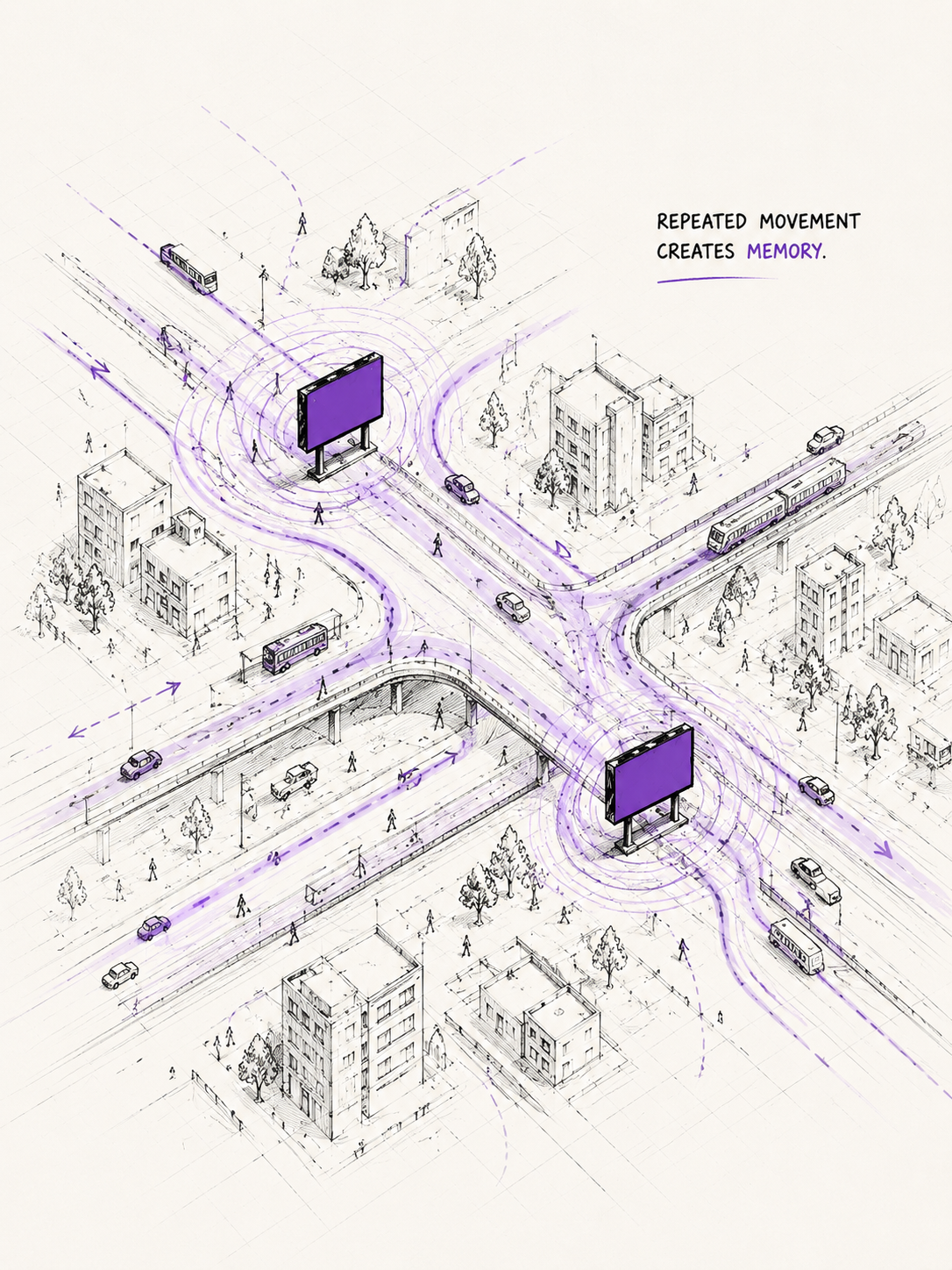
Outdoor advertising is not just exposure—it is repeated memory encoding under real-world movement conditions. Adnoxy helps brands evaluate locations based on how memory is actually formed during movement, ensuring you only invest in placements capable of lasting mental reinforcement.
Outdoor advertising still accepts guesswork that no digital marketing team would tolerate.
- ₹Spending huge budgets based only on what a vendor recommends.
- ?Never knowing why one billboard was chosen over the one down the street.
- ≈Giving the same brief to two agencies and getting two completely different plans.
- ↗Relying on raw traffic numbers that don't tell you if the right people are actually looking.
- ✕Getting media plans that are impossible to verify or compare.
Better outdoor advertising starts with
better decisions.
The industry spends too much time chasing generic impressions and not enough time planning for commuter recall. Adnoxy reframes the category: we evaluate OOH based on repeated exposure along commuter routes, helping you check your shortlist so every single placement is justified by real visibility value.
- 01A billboard is just a point on a route. We evaluate the whole route, not just the board.
- 02Two locations might cost the same but do completely different jobs. Most plans won't tell you the difference.
- 03Good visibility means reaching the same people multiple times on the right roads—not just buying high traffic numbers.
- 04The most important moment is when a site is added to your plan. That's what needs to be checked and justified.
Same traffic. Same price. Completely different value.
Outer Ring Rd · Marathahalli flank
- Route purpose
- A core route. Reaches the same daily commuters over and over.
- Traffic context
- Slow traffic during weekdays means people actually have time to look.
- Target audience
- Perfect match for the brand's target audience of IT professionals.
- The tradeoff
- There are other ads around, so it's about being seen often, not being the only one.
Whitefield · service-road approach
- Route purpose
- A transitional artery. High vehicle volume, but less predictable daily repetition.
- Traffic context
- Complex lane merges require higher driver cognitive load, reducing peripheral ad focus.
- Target audience
- Audience overlap exists, but repetition quality degrades across the merge sequence.
- The tradeoff
- Exposure exists, but attention fragments before retention forms.
Note — Even with the same traffic numbers and the same price, one location works and the other doesn't. The clear reasoning makes all the difference.
See the full location evaluationMore than just a tool. A complete system built to bring logic to outdoor advertising.
Spatial Evaluation
Scoring routes, visibility conditions, repetition patterns, and attention stability.
Plan Construction
Comparing placements and eliminating structurally weak inventory before budgets are committed.
Market Execution
Negotiating, validating, and coordinating inventory across fragmented vendor ecosystems.
Reinforcement Learning
Using deployment outcomes to recalibrate future corridor scoring models.
Our deep understanding of urban movement powers every stage of the process, ensuring every placement decision is backed by defensible reasoning.
Our reasoning is actively used by planning teams and agencies every day to make real media buying decisions.
Explore our system architectureActive deployments.
Verified across real OOH campaigns.
Our system is built on real work, not theory. We actively source billboards, coordinate with local vendors, and build media plans for active campaigns. The scoring models and data shown here are based on live OOH planning across actual Indian transit corridors and verified commuter routes.
- City routes analyzed
- 27
- Plans evaluated
- 230+
- Commuter routes mapped
- 184
- Brand types tested
- 12
traffic patterns understood across major cities
evaluations done for real advertising campaigns
daily travel paths scored and validated
different brand strategies mapped to real city behavior
How movement data shaped a
real-world OOH deployment.
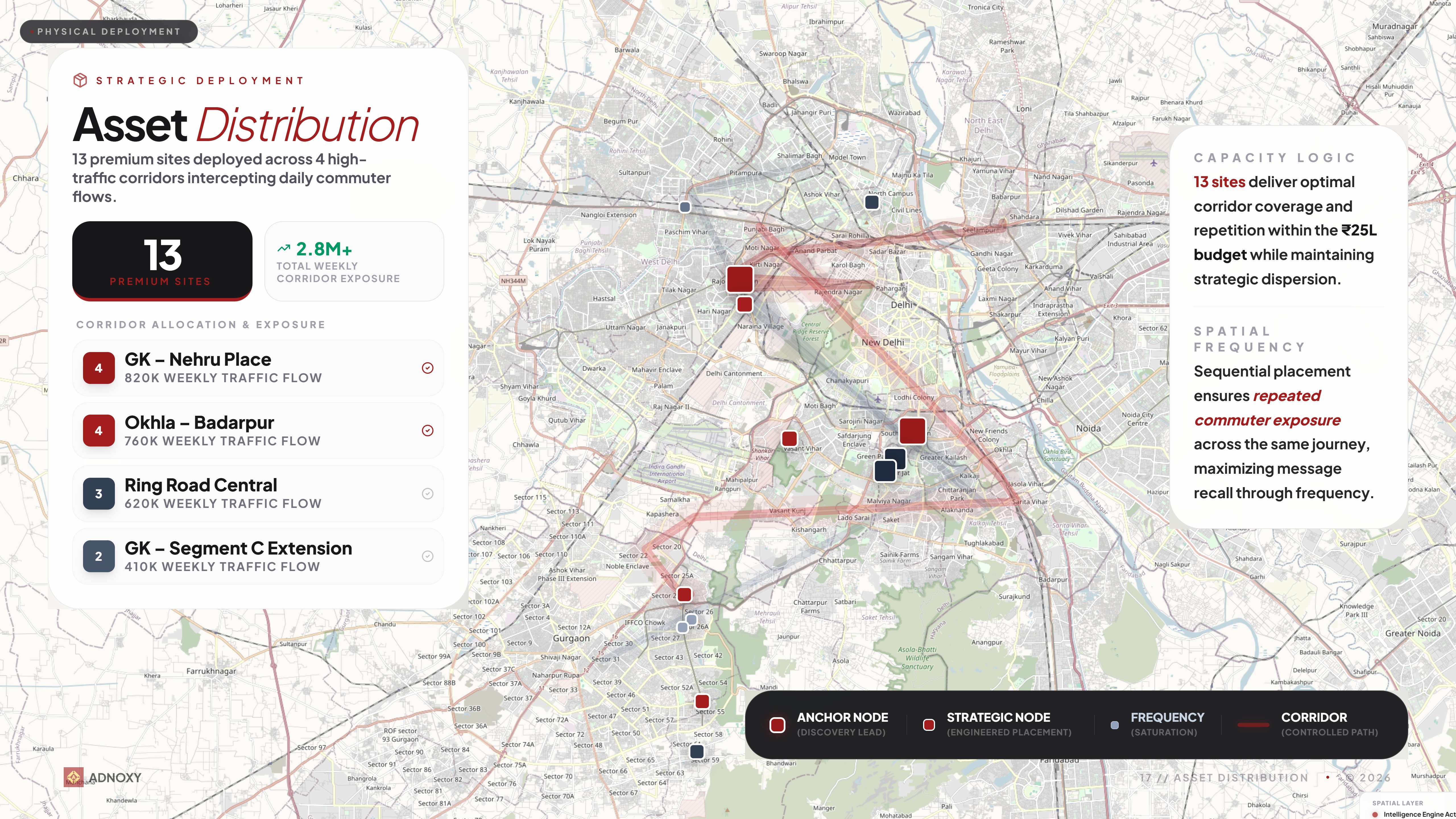
This is not a site-by-site evaluation. It is a campaign-level planning study showing how audience movement, corridor intensity, and locality structure influenced media allocation across Delhi NCR for a premium real estate client.
- 70%+ elite commuter demand captured
- ▸1.8× more HNIs reached vs standard deployment
- ▸~72,00,000 individuals intercepted 3-5× daily
Spatial research &
field observations.
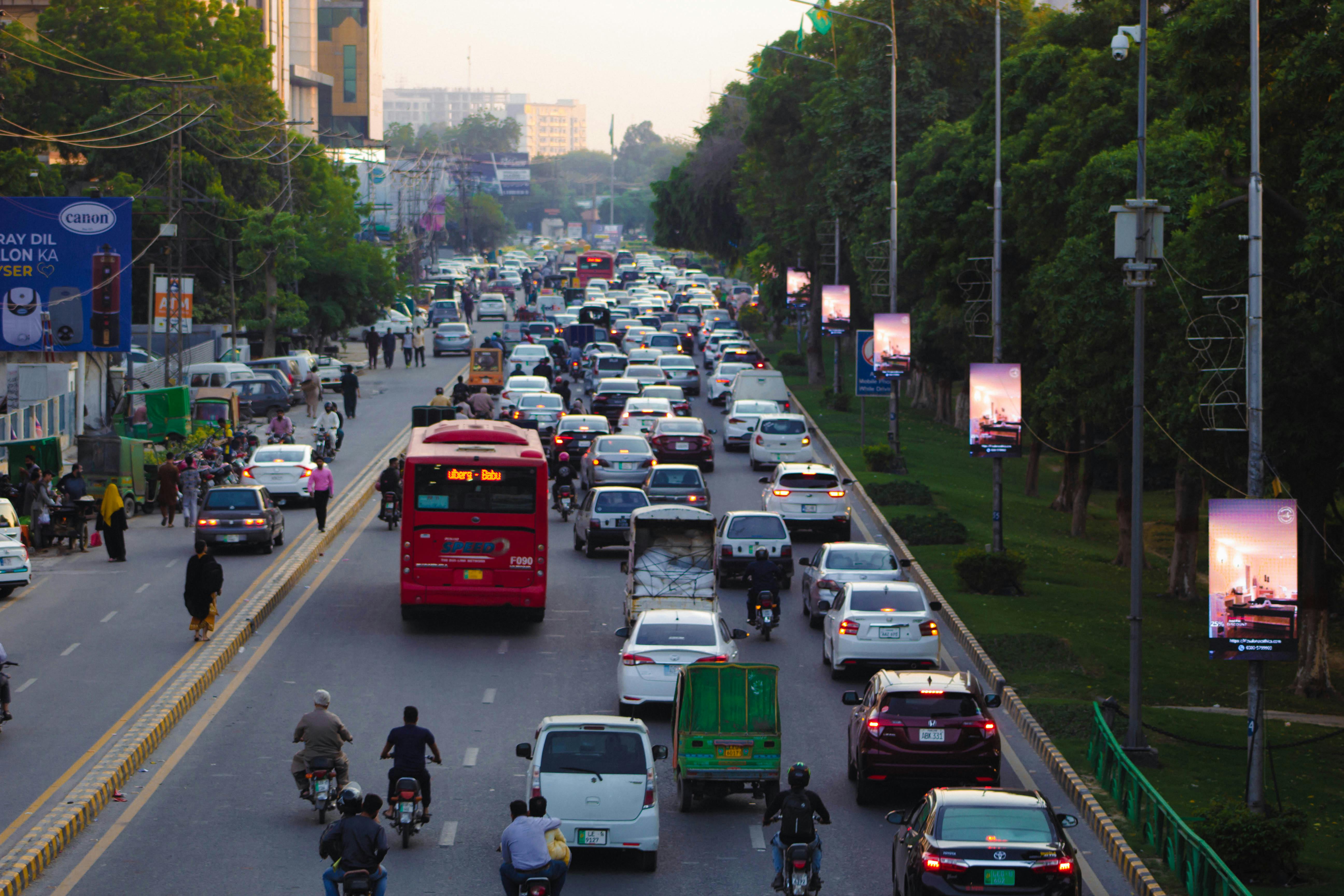
AI DOOH Audience Targeting in India: How ADNOXY Scores It
AI DOOH audience targeting in India matches digital billboard placements to verified audience data. See how ADNOXY targets the right people at adnoxy.com.category: OOH Advertising
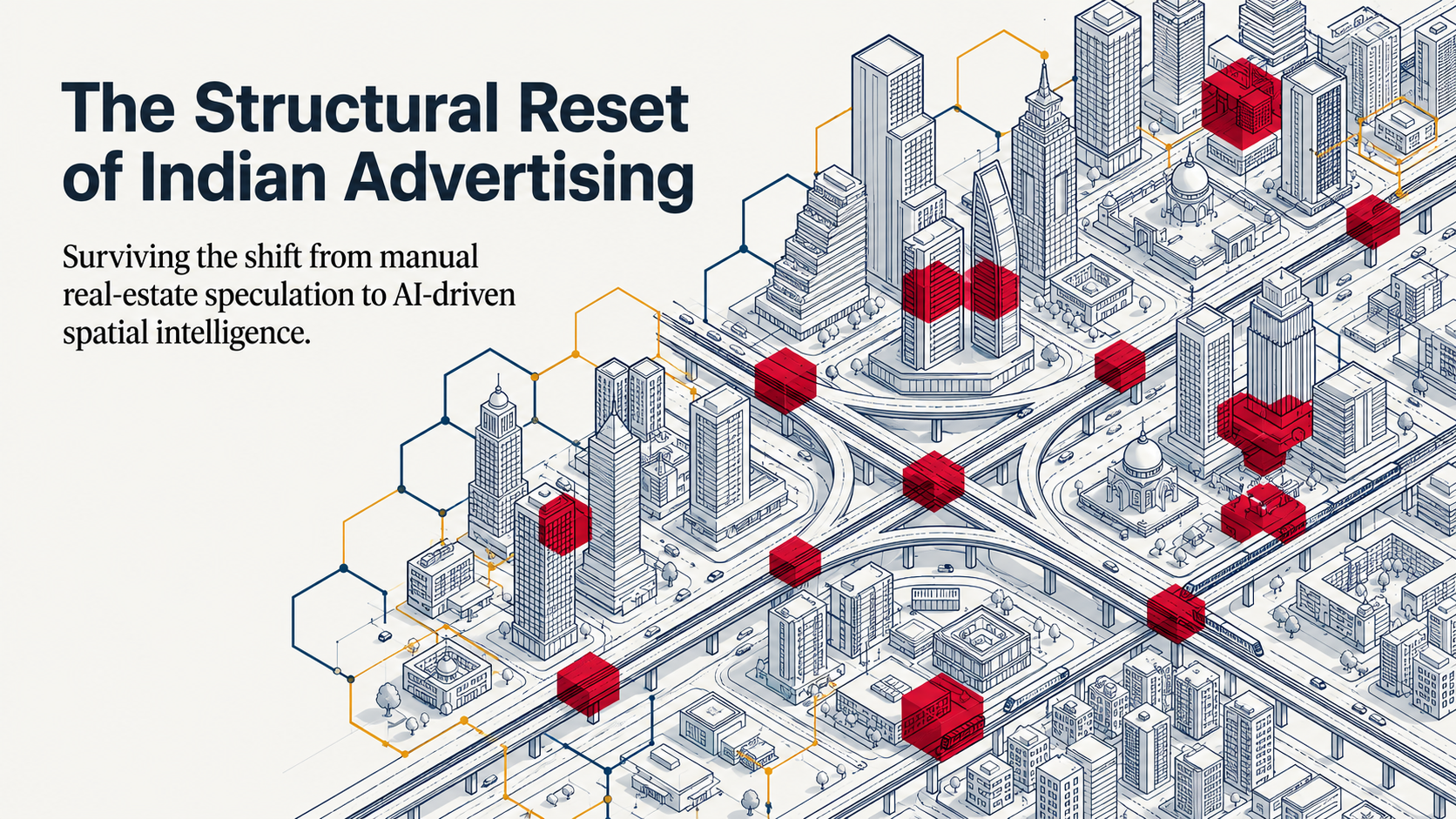
AI Powered Digital Billboard Buying: the End of Manual OOH Planning
AI powered digital billboard buying India is rewriting the rules of out-of-home advertising as brands reject legacy agency plans built on relationships and...category: OOH Advertising
AI Powered Programmatic DOOH Platform: in India How It Works in 2026
Integrating an AI programmatic DOOH platform India has shifted from a novel experiment to a structural survival mechanism for media agencies seeking to...category: OOH Advertising
Bring us a brief.
We'll bring the reasoning._
No sales pitches or endless slides. We'll evaluate a real shortlist of locations in your target city and show you exactly why and where you should advertise.
It takes about 15 minutes.
Vendor-neutral evaluation. Corridor-first intelligence. Structurally defensible recommendations.