01About ADNOXY

An honest path
for outdoor advertising._
Built from the inside out.

The Out-of-Home industry has a structural problem that persists today.

Not a technology problem. Not a data problem. A standards problem.

There is no shared framework for what a defensible location decision looks like. No evaluation logic that two agencies could both apply and reach a comparable output. No audit trail behind site selection.

Adnoxy was built to make that standard measurable.

02How We Got Here

Two engineers who set out
to solve a standards problem.

Naman and Aman studied engineering together at NIT Jaipur. After graduation, they moved in different directions.

Naman moved through Samsung into a Chief of Staff role at a gaming company, working on user acquisition. That world runs on attribution, scoring, and the discipline of not spending a rupee without being able to explain what it bought. He got comfortable asking: can this decision be justified structurally?

Aman moved from SocGen into building a retail advertising venture, working directly inside the supply-side economics of physical advertising. He spent years watching how inventory gets assembled and how fragmented the infrastructure becomes when you're inside it. He got comfortable asking: why doesn't any of this have a standard?

They arrived at the same conclusion from opposite directions.

Outdoor advertising had no evaluation standard. No way to score a location independently of who was selling it. No logic that separated a good plan from an available one.

From a user acquisition background, this looked like a budget accountability failure. From a retail platform background, it looked like an infrastructure failure. From both angles, it looked like something software engineers might be able to fix.

That was the beginning of Adnoxy.

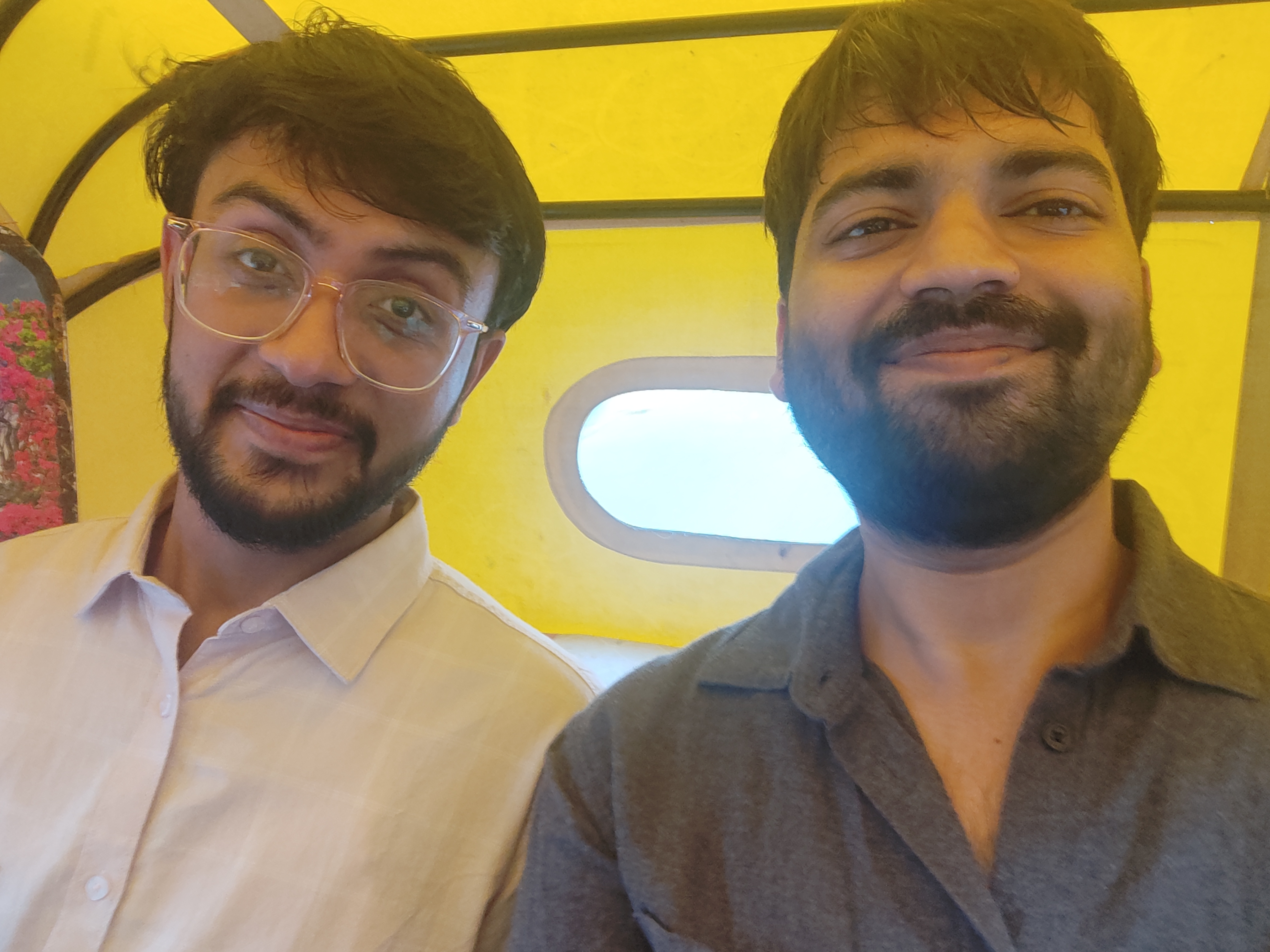
The Adnoxy team
03The Team

The minds behind
the evaluation layer.

Naman - CEO
CEO
Naman
LinkedIn

Came to outdoor advertising from the demand side. User acquisition in gaming taught him what disciplined campaign logic looks like: every allocation traceable, every decision defensible at a board level. When he looked at OOH, the absence of scoring frameworks and comparable evaluation logic was immediate.

He leads Adnoxy's commercial direction and the positioning of the evaluation standard. The question he keeps returning to:

can the person who approved this budget explain exactly why each decision was made?

Aman - CTO
CTO & Architect
AMAN
LinkedIn

Came to outdoor advertising from the supply side. Building a retail advertising platform meant living inside the mechanics of physical inventory: spreadsheets passed between vendors, inconsistent pricing logic, and media plans shaped more by availability than evaluation.

He architects the intelligence system: spatial models, scoring logic, and corridor evaluation frameworks built from direct operational exposure to how OOH planning actually works in the field.

why are media plans shaped by availability instead of evaluation?

04What We Believe About Cities

A billboard is not an asset.
It is a node inside a movement system.

Its value is not a property of the billboard itself. It is a property of the corridor it sits on, the audience that traverses it, the frequency with which that audience returns, and the cognitive conditions under which exposure occurs.

Corridor

A corridor's role in the city matters more than the billboard placed on it. The way a route connects residential origin to employment destination determines the quality and repeatability of the audience it carries.

Repetition

A single impression produces visibility. Repeated impressions on the same route produce memory. Campaigns that ignore commuter return loops are buying reach they cannot convert.

Locality

The neighbourhood's functional role is more predictive of audience quality than its traffic count. Without locality context, high footfall and relevant footfall are indistinguishable.

Cognitive Load

Not all visibility is equal. Merge lanes, flyover approaches, congestion bottlenecks, and cluttered intersections all create different attentional conditions. The physical environment of the exposure matters as much as the exposure itself.

These are the variables the system evaluates.

Not square footage. Not vendor tier. Not availability.

05Trust & Neutrality

We do not promise certainty.
We promise visible truth.

Cities are dynamic, traffic is unpredictable, and no spatial model is perfect. What we promise is that the uncertainty is visible, reported openly rather than hidden behind inflated counts and unverifiable claims.

Evaluation before selection

Every location is scored against movement data before it enters a recommendation. The plan is built around what the city's movement structure demands. Inventory follows logic.

Vendor neutrality

Adnoxy does not own, lease, or sell physical billboard inventory. Our scoring logic does not know who owns a site. The vendor is irrelevant to the output.

Honest uncertainty

If an audience estimate carries variance, we report it. If attribution is probabilistic, we say so explicitly. The trust case is built on visible limits, not invisible ones.

Explainability as a gate

Every site selected has a documented structural reason. Every site rejected has a documented structural explanation. If a recommendation cannot be explained in plain reasoning, it does not make the plan.

06The Future

Outdoor advertising
needs a standard layer._

A framework that makes OOH plans comparable, auditable, and defensible regardless of which agency produces them.

That is infrastructure, not software.

We are building it from the inside out.

What we do

We help you evaluate existing plans, audit vendor recommendations, or build new strategies from scratch.

Direct Contact
business@adnoxy.com