Transitioning to AI outdoor advertising ROI measurement India marks a decisive shift away from legacy media planning frameworks that have historically run on gut feel and agency handshakes. With marketing budgets coming under extreme scrutiny, offline investments can no longer survive on unverified traffic estimates and postcards of completed installations.
The rapid pace of infrastructure modernization means that municipal street furniture, airport concessions, and new transit corridors are demanding a unified validation metric. In 2026, the Indian advertising landscape is undergoing a massive rebalancing as brands seek genuine business outcomes over speculative brand awareness. As the physical market expands to a projected ₹8,000 crore, the rapid scaling of digital out-of-home networks is enabling programmatic agility and real-time campaign optimization.
Decoding the spatial intelligence behind offline performance attribution
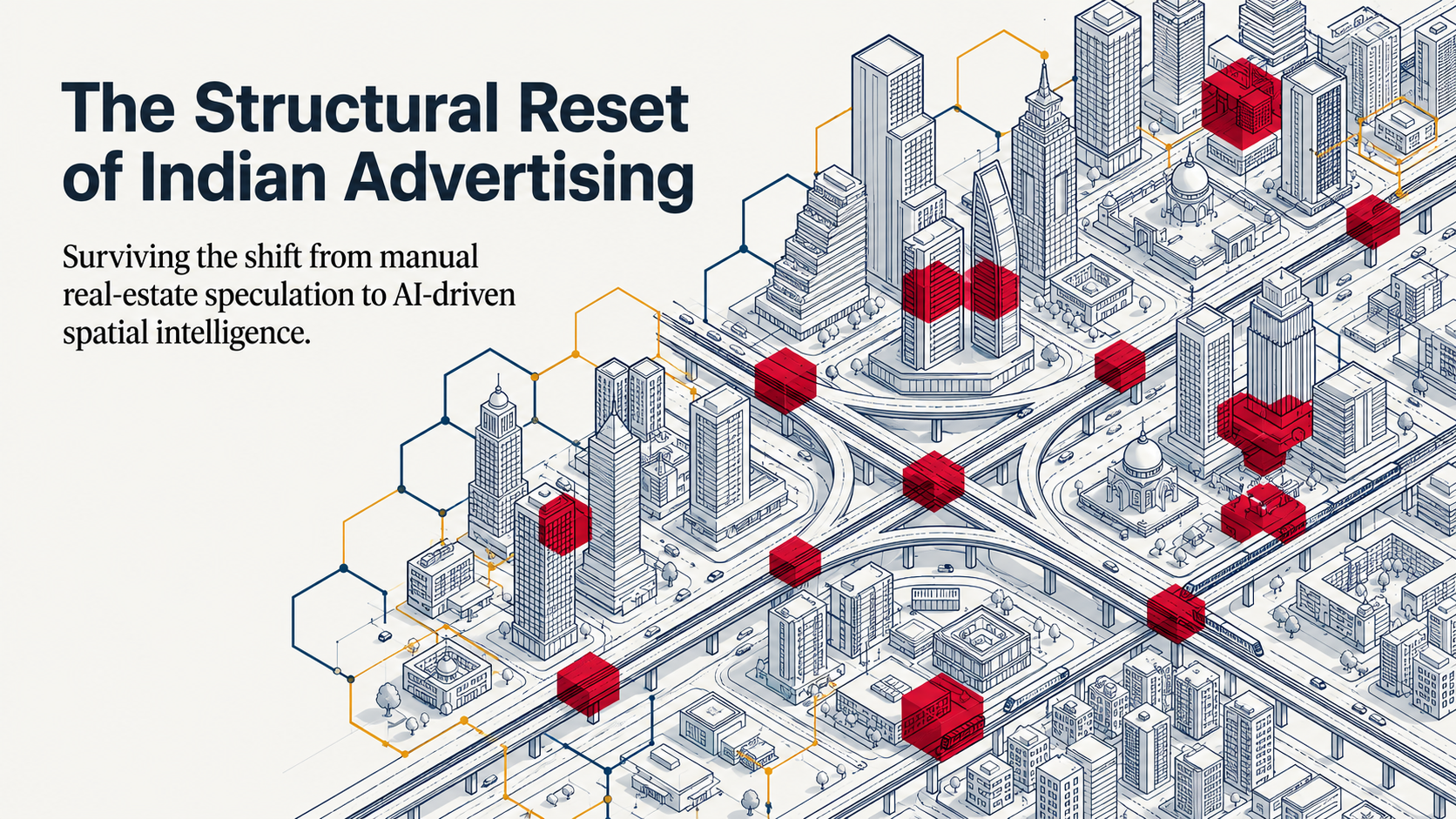
The technology operates as a spatial rating engine that evaluates cities as living behavioral systems rather than static grids of inventory. By segmenting urban landscapes into hexagonal cells with a 460-meter edge length, the system creates a granular, standardised framework where human movement patterns and transactional signals are continually analyzed.
Every hexagonal cell acts as an independent behavioural unit, calculating four specific parameters: Audience, Movement, Commercial, and Intent. The system filters raw mobility trajectories to isolate target personas, rejecting the traditional industry bias that rewards raw vehicular throughput. By processing live retail densities and local transaction liquidity, the model calculates whether the surrounding physical context matches a brand's commercial archetype. Consequently, assets inherit their strategic valuation from the structures above them, confirming that placements align with actual consumer mindsets.
Most planners still do not know this.
They continue to buy physical assets based on outdated traffic sheets and historic volume estimates. Transitioning to an algorithmic location scoring model is the only way to establish a baseline of accountability before committing marketing capital.
Standardized metrics like viewable impressions and Opportunity to See are replacing static circulation data. By processing device-level location data and connected vehicle signals, the platform quantifies the actual dwell conditions and visual exposure angles of passing consumers. This shift turns the physical city into a transparent operating system that integrates with your broader performance marketing stack.
How legacy media buying models drain marketing budgets on high-speed expressways
The historical reliance on supply-side media planning means that available inventory is consistently favored over audience relevance.
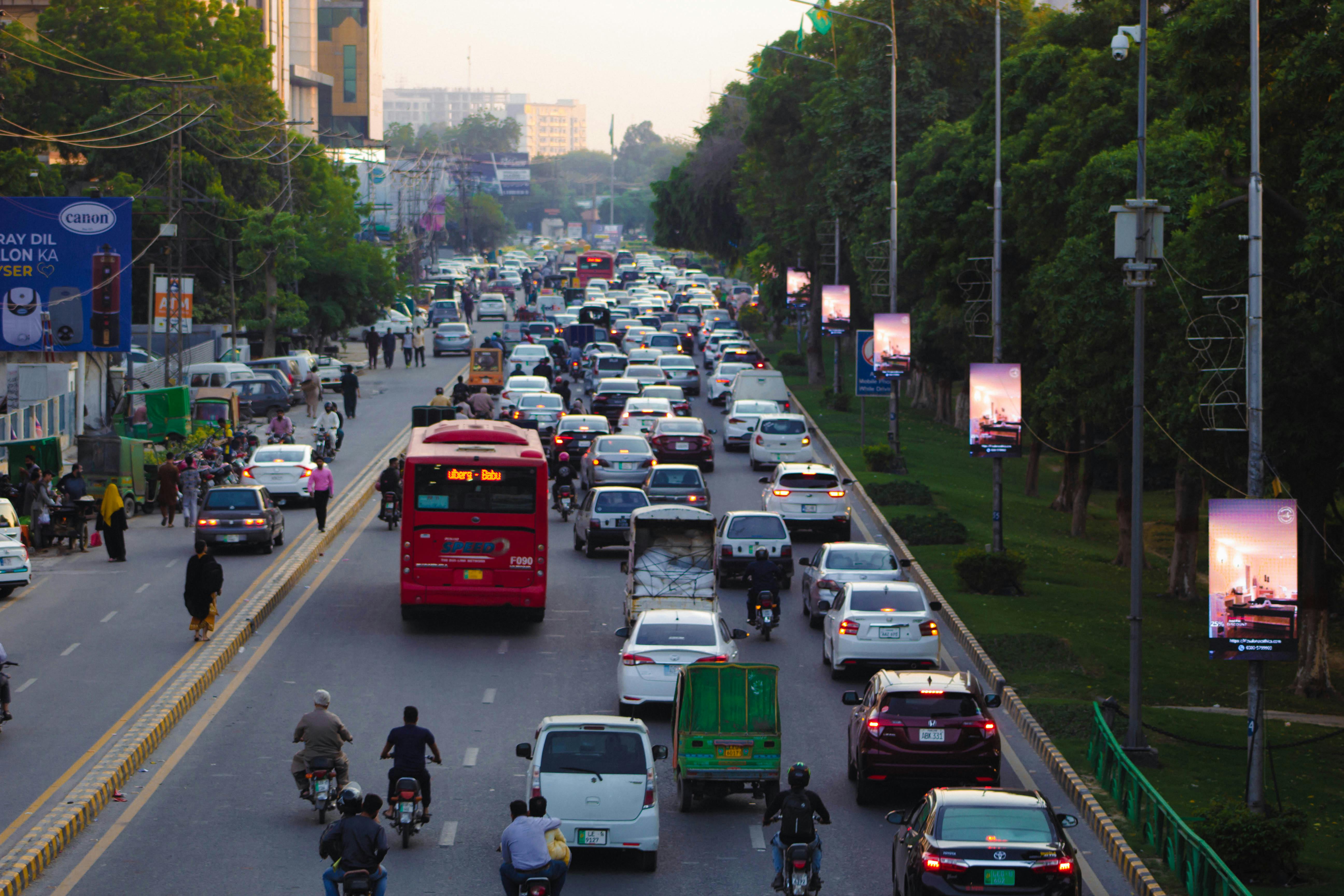
Consider a recent campaign where a prominent fintech brand attempted to drive mobile app installations among high-income salary earners commuting along the Outer Ring Road in Bengaluru. The agency recommended several massive hoardings positioned near high-speed flyover exits, claiming a spectacular weekly reach of over ten lakh unique views. Because vehicles bypassed those junctions at seventy kilometers per hour, the actual attention window was less than two seconds, yielding near-zero app downloads. The brand spent lakhs of rupees on highly visible boards that functioned as expensive street wallpaper rather than a conversion driver.
A subsequent audit using our spatial intelligence engine revealed that shifting the budget to signal-controlled intersections near tech park entries would have increased dwell time by 400%. By focusing on transition zones where professionals naturally stall, the brand could have generated meaningful recall at a fraction of the cost.
To be direct about something most platforms will not say, full attribution for a static hoarding in a tier-3 city is still genuinely difficult. The data models exist, but the physical ground-truth verification infrastructure in smaller, emerging markets is still catching up. Anyone selling you a complete real-time solution for that specific tier-3 problem is oversimplifying it.
Nobody talks about this openly.
Inverting the planning pipeline with a data-first attribution system
We do not sell space; we score it, and our role is to introduce comparability and structured reasoning into a market that currently operates on handshakes. When clients first see the hexagonal demand model, the question is almost never about accuracy; it is always about which zones their competitors have not covered yet. That specific inquiry changed how we think about the entire platform, prompting us to build active competitive tracking layers directly into our strategic recommendation engine. This means our system does not just provide retrospective dashboards, but active, predictive guidance that helps you capture market share.
And that changes everything about how you plan.
By providing programmatic billboard ROI tracking AI solutions, our platform allows you to evaluate every placement before committing your budget. Explore the full platform at adnoxy.com.
Our spatial engine operates like a credit rating agency, rating physical sites on an objective, auditable scale. This neutral scoring blocks the conflict of interest inherent in agency plans that are stuffed with low-yield, self-owned inventory. As one media planner put it: "We stopped trusting gut feel the day ADNOXY showed us the data."
Validating campaign outcomes with AI outdoor advertising ROI measurement India
Measuring real-world campaign performance requires a standard of mathematical precision that matches your digital performance dashboards.
According to the Pitch Madison Report 2026, out-of-home was the only traditional medium to post healthy growth, expanding by 4% as urban mobility normalized post-pandemic. A comprehensive study by Nielsen India indicates that physical billboards deliver an 82% ad recall rate — the highest of any media channel, including online social feeds. Additionally, research compiled by Shubindia Ad Works shows that combining physical OOH with mobile digital retargeting generates a 48% lift in overall brand recall.
Dynamic figures from across the industry show that real-world visibility remains incredibly potent when it is deployed with scientific rigor rather than guesswork. Our platform tracks these multi-channel linkages anonymously, proving how physical exposures translate into direct website visits and search query lifts.
Featured by Inc42 as one of India's Top 5 AI Startups To Watch in February 2026, ADNOXY evaluates over 50,000 distinct billboard locations across the country. The platform achieves an 85% predictive accuracy in campaign performance forecasting, allowing brands like Tata, Axis Bank, Nivea, and Nestlé to commit offline capital with total confidence. By processing device-level movement signals, we help brands measure the exact conversion rate lift across different formats and markets. The integration of dynamic data into our core engine is what makes physical media highly predictable.
Strategic blueprints for modernizing your media mix
To extract the maximum value from your physical campaigns, your brand must completely abandon the practice of chasing vanity circulation metrics. Implementing an AI outdoor advertising ROI measurement India setup requires brand managers to pivot from buying gross impressions to scoring actual engagement duration.
Stop buying reach; your brand does not have a visibility problem, it has a repetition problem, and most outdoor plans actively make it worse by spreading budgets across disconnected locations. When you buy a single hoarding in ten different neighborhoods, you fail to hit the neurological frequency threshold required to build long-term memory effects. Focus your capital on high-dwell transition corridors where audiences repeat their journeys daily, such as the OMR IT corridor in Chennai. By concentrating exposure along these predictable paths, you build a sustainable frequency advantage that actually drives purchase intent.
That is the core failure.
Most brands buy whatever the vendor has available, creating disjointed campaigns that lack strategic narrative flow. By treating your real-world placements as a sequential performance funnel, you can trigger digital actions right from the street. Our digital management options, including ADNOXY Command, make this multi-location reinforcement strategy easy to track.
How to evaluate your outdoor campaign with concrete data
I recently sat in a planning session where a prominent consumer goods company was evaluating multi-city campaign proposals for a new product launch. The traditional media agency presented a deck filled with standard roadside locations, relying on historic vehicle volume counts to justify a premium pricing model. In contrast, a data-driven proposal evaluated the same city corridors using our smart billboard platform, identifying key transition zones where slow-moving traffic facilitated high engagement.
When the brand manager compared the two approaches, they discovered that the traditional plan spent 60% of the budget on high-speed roads where ad recall was virtually zero. By shifting their capital to signal-controlled intersections and transit hubs, the brand achieved a 35% higher ad awareness score and a documented 18% lift in store visits.
Standardizing your offline media plans with an outdoor campaign effectiveness measurement index helps protect your budget from speculative agency claims. The comparative media efficiency table below highlights how physical billboards deliver highly competitive recall at a fraction of the cost of digital alternatives. Choosing a platform that uses a glass-box methodology confirms that your real-world placements are rated, scored, and structurally justified before a single rupee moves. Objective mathematical precision is what transforms out-of-home advertising from an administrative task into a predictable growth engine.
| Format |
CPM in INR |
Ad Recall Rate |
Skip or Block Rate |
| Standard Billboards |
₹5–₹15 |
82% |
0% |
| Television Commercials |
₹100–₹300 |
62% |
25% |
| Digital Display Ads |
₹50–₹200 |
41% |
65% |
| Social Media Ads |
₹30–₹150 |
38% |
70% |
| Newspaper Print |
₹150–₹500 |
55% |
30% |
Demanding clear, programmatic validation for your out-of-home advertising is no longer a luxury but a fundamental right for brands that want to protect their budgets from wasteful guesswork. As Indian metros continue to expand and transit networks grow smarter, the legacy model of buying billboard space based on agency friendships is officially coming to an end. The future of the industry belongs to the marketers who treat the physical city as an auditable performance channel. By establishing a standard of spatial intelligence today, your brand can turn physical visibility into a highly predictable, flexible, and measurable science.
Frequently Asked Questions
How do brands measure OOH return on investment in India?
Brands measure campaign impact by matching mobile location signals with digital actions like website visits or app downloads. The ADNOXY AI engine tracks these offline-to-online connections anonymously to prove exact lift metrics. This replaces old guesswork with real business outcomes.
What is the advantage of using a smart billboard platform?
A specialized platform evaluates city corridors before looking at individual billboard inventory. By analyzing traffic velocity and viewing angles, the system rates each site for true audience attention rather than raw vehicle counts. This method helps brands secure high-recall placements with total clarity.
How does an outdoor AI tool identify target audiences?
The technology divides urban environments into granular hexagonal units to analyze demographic and movement signals. This helps the engine determine where specific consumer personas concentrate throughout their daily routines. Planners can then match their creative messaging with high-indexing locations automatically.
Why is there an audit gap for offline campaigns?
The audit gap refers to the lack of clear performance verification for real-world placements compared to digital channels. Traditional agencies typically provide only a site list and basic traffic estimates after the campaign has concluded. Standardized scoring fixes this risk by verifying placement value before any capital is committed.
What are transition zones in outdoor campaign effectiveness measurement?
Transition zones are physical choke points where commuters shift between workplaces, retail clusters, and residential neighborhoods. Because traffic naturally slows down at these intersections, billboards positioned here deliver much longer viewing times. This extended exposure generates significantly stronger memory retention for your brand.