ADVERTISING PSYCHOLOGY//September 20, 2025//5 min read
Why Emotion Still Closes the Sale
Buying decisions are rarely driven by logic alone. Emotion creates urgency, meaning, and movement at the moment of choice.
Buying decisions are rarely driven by logic alone. Emotion creates urgency, meaning, and movement at the moment of choice.
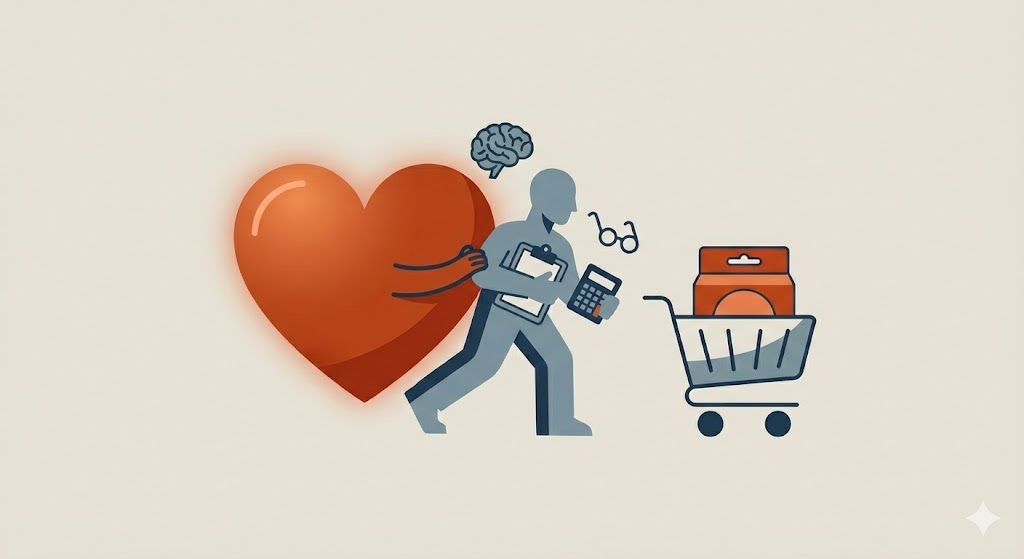
Marketers like to believe consumers are rational. Features are compared. Prices are weighed. Reviews are scanned. The better product, at the right price, should win.
Yet buying decisions rarely follow that script.
People justify purchases with logic, but they are usually moved to act by emotion. This is not a flaw in human judgment. It is how judgment works.
Logic plays an important role in advertising. It answers objections. It reassures. It gives people reasons they can explain later.
But logic rarely creates urgency. Emotion does.
An ad that makes someone feel understood, hopeful, relieved, or inspired shortens the distance between consideration and action. It transforms a product from an option into a solution—not because the facts changed, but because the meaning did.
This is why emotionally resonant ads are remembered longer and discussed more often. They attach themselves to identity and experience, not just utility.
Neuroscience has made one thing clear: emotion is not separate from decision-making. It is central to it.
Even highly analytical people rely on emotional signals to prioritize information and choose among alternatives. When an ad triggers a feeling, it creates salience. The message stands out and becomes easier to recall later, especially at the moment of purchase.
Logic may inform the choice. Emotion determines which choice feels right.
Emotional advertising is often misunderstood as sentimentality. It does not require dramatic music or sweeping narratives. Often it is quieter.
A moment of recognition. A small sense of relief. A feeling of belonging. Confidence that a decision will not backfire.
The most effective emotional ads respect the audience. They do not manipulate feelings. They reflect them. They present a problem people recognize and a future they want to move toward. Emotion does not replace the product. It frames it.
Ads built entirely on logic assume attention and patience. They expect consumers to process information amid distraction, fatigue, and competing priorities. That is a high bar.
Specs, comparisons, and rational arguments are useful once interest exists. On their own, they rarely create it. They answer “why this,” but not “why now.” Without emotional momentum, even strong rational messages stall.
Emotion alone is not enough. An ad can move people and still fail if the product does not deliver or the promise feels hollow.
The most persuasive advertising pairs emotion with credibility. Feeling opens the door. Logic keeps it open. Consumers want to feel confident, not fooled. Emotional resonance builds trust only when it aligns with reality.
In crowded markets, consumers do not have time to evaluate everything. Emotion acts as a shortcut, helping people decide quickly and with less mental effort. This is not laziness. It is efficiency.
Brands that understand this do not shout louder. They connect better. They recognize that purchasing is not just a transaction, but a personal decision layered with risk, hope, and expectation.
Logic may make people think. Emotion makes them move. And in advertising, movement is what matters.
Naman Sanghi is the CEO of ADNOXY. He is a spatial flow expert and campaign strategist dedicated to establishing neutral, movement-based evaluation standards in physical advertising.